

If you have been following headlines about Canadian real estate over the past year, you have likely heard two completely contradictory predictions. On one side, alarmists predict an impending market crash. On the other, speculators promise an immediate return to the frenzied bidding wars of 2021.
The actual data paints a far more reassuring and stable picture.
According to comprehensive research released in the latest CMHC Housing Supply Report, Canada's real estate market is transitioning away from pandemic-era volatility and entering a phase of steady, fundamentally driven recovery.
Instead of dramatic swings, the next five years (2026 through 2031) are projected to deliver gradual, healthy price growth supported by immutable economic fundamentals: persistent population growth, falling interest rates, and an unprecedented deficit in new home construction.
For home buyers, upsizers, and long-term investors across the Greater Toronto Area, understanding these numbers reveals a clear strategic advantage. Today's balanced market conditions represent the structural floor of the current real estate cycle. Here is what the numbers really mean for your real estate plans over the next five years.
To understand where home prices are headed, you must first look at the mathematical reality of home construction in Canada.
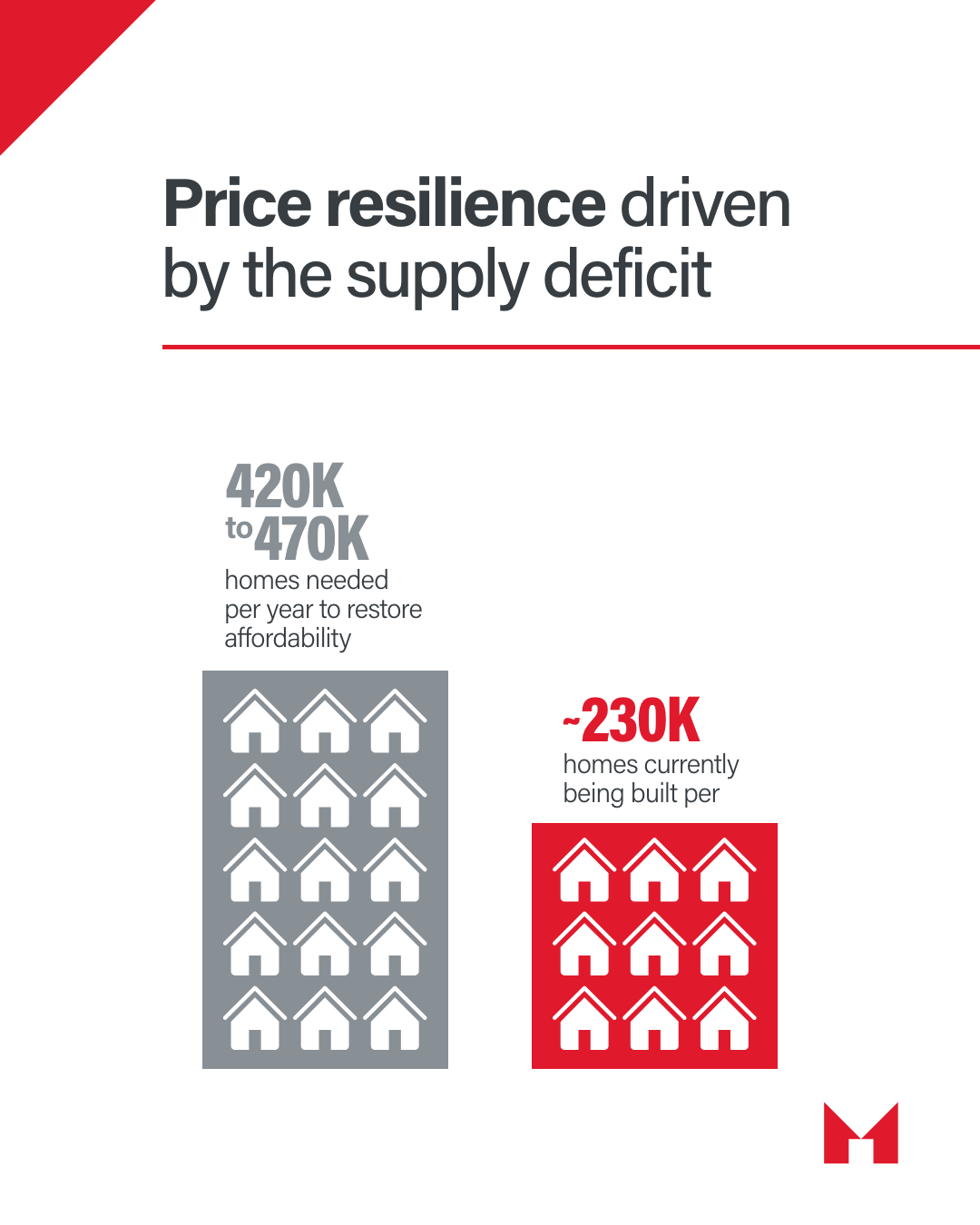
To restore housing affordability to pre-pandemic levels by 2036, Canada Mortgage and Housing Corporation (CMHC) estimates that Canada needs between 417,000 and 469,000 new housing completions every single year.
However, Canada's current construction pace is averaging only about 231,000 completed homes per year. That creates a national supply shortfall of roughly 187,000 to 238,000 housing units annually.
In major urban centres, this gap is even wider. Within the Toronto Census Metropolitan Area (CMA), achieving sustainable affordability requires roughly 62,000 to 68,000 new home starts annually. Current construction starts sit at only 42,000 units per year, leaving an annual deficit of up to 26,000 homes in our local market alone.
Making matters more acute, new home construction starts have dropped significantly throughout 2025 and 2026. High financing costs and municipal development delays caused pre-construction condominium starts in the City of Toronto to drop to historical lows during the first half of 2026.
Because high-density residential towers require three to five years from launch to final occupancy, the slowdown in current construction guarantees an acute shortage of newly completed inventory between 2028 and 2031. When demand inevitably surges as borrowing costs normalize, returning buyers will be competing for a very limited pool of completed properties.
What does this supply bottleneck mean for property values between now and 2031? Rather than rapid spikes, housing authorities forecast a period of moderate, sustainable appreciation. The national average resale price trajectory is projected to move along a steady, predictable curve:
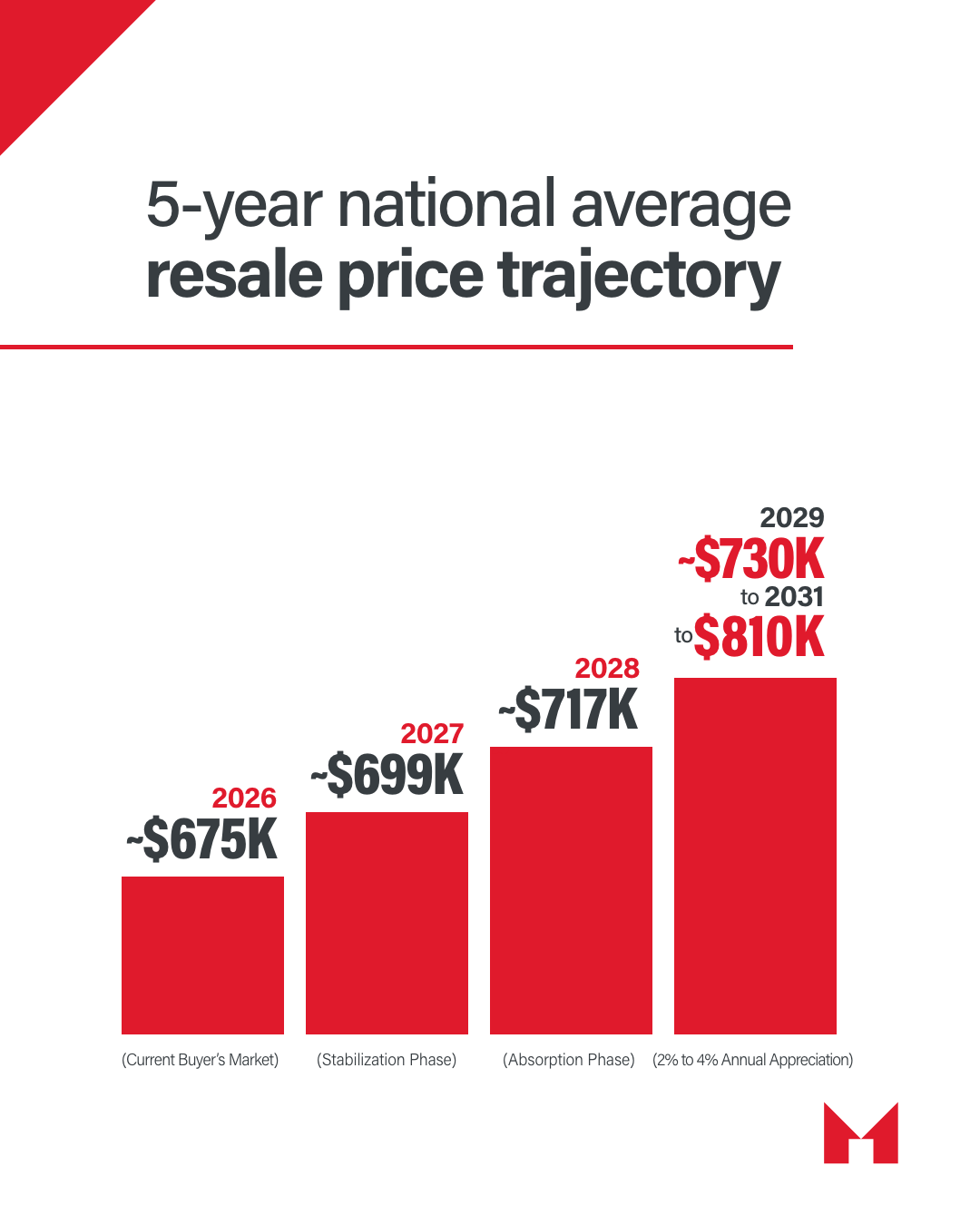
This gradual recovery allows household incomes to catch up with housing costs while protecting existing home equity. For buyers currently sitting on the sidelines, purchasing during today's stabilized window allows you to secure real estate at today's prices before compounding appreciation resumes.
While national averages provide helpful macro context, real estate is fundamentally local. Specific communities across the Greater Toronto Area are positioned for outsized stability based on transit expansion, municipal infrastructure, and neighbourhood demand.
Navigating a shifting real estate cycle requires looking beyond daily media headlines. In today's market, smart decision-making comes down to recognizing timing and leverage.
For sellers planning an upcoming move, proper preparation, professional staging, and multi-channel marketing are essential to set your home apart from competing inventory. You can review our step-by-step framework in our complete seller's guide or see how our unrivalled property marketing strategy exposes your home to qualified buyers across the region.
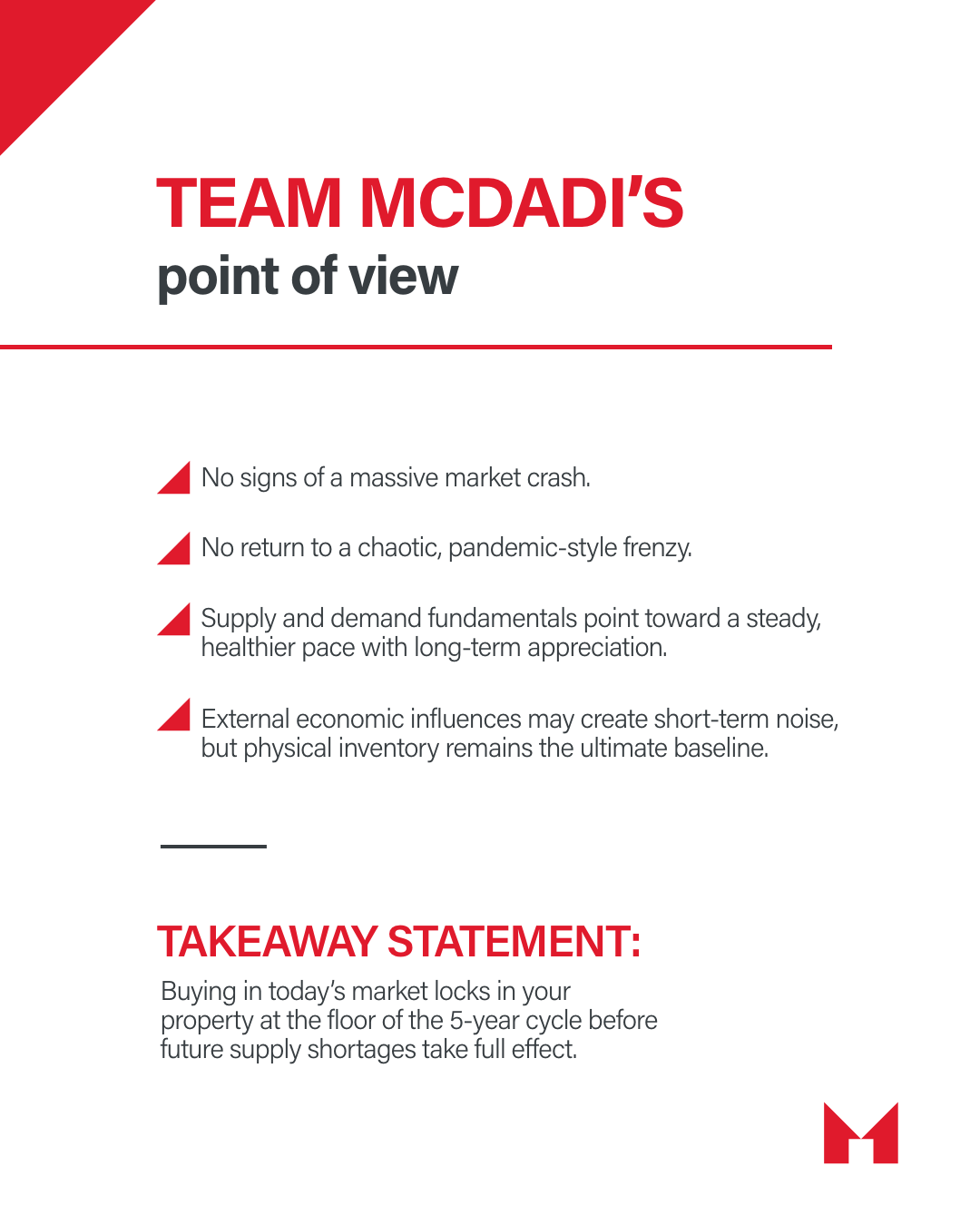
For buyers and move-up families, current conditions offer a rare luxury: the ability to tour homes without extreme time pressure, negotiate favourable terms, and secure property at a proven market floor.
Even if selling your home today feels like a compromise compared to peak pricing from a few years ago, the financial gap to trade up into a larger property is actually much smaller. For example, if you sell your current property for $100,000 less than its peak valuation, but purchase your upgraded home at a $400,000 discount compared to previous hot market conditions, you lock in a net $300,000 advantage on the total transaction.
At Sam McDadi Real Estate Brokerage, our guidance is built on 35 years of local market experience, clear economic data, and unmatched transaction results.
Based on official Toronto Regional Real Estate Board (TRREB) statistics, Team McDadi has been ranked as the number 1 full-service real estate team in the Greater Toronto Area for 15 consecutive years. Having completed over 17,600 successful transactions and generated more than $11 billion in total sales volume, our team brings proven negotiation power to every transaction.
Backed by a multicultural team of over 60 real estate professionals speaking more than 20 languages, we live by a simple guiding principle: no home is too big or too small for Team McDadi. Whether you are buying your first home, upsizing for a growing family, or expanding an investment portfolio, our commitment to your financial success is absolute. For real.
Ready to explore your options or view active listings across the GTA? Browse our current GTA listings, or evaluate your current home value with our free home evaluation portal.
You can also meet with our experienced sales specialists at any of our regional offices in Mississauga, Oakville, Burlington, Milton, or Hamilton. Contact our team today through our online contact form to begin planning your next move with total confidence.